Well Pump Replacement, Sized to Your Well
Well pump replacement in the Nampa area: how a new pump is sized to your well depth, water table and water use, and what the swap involves.
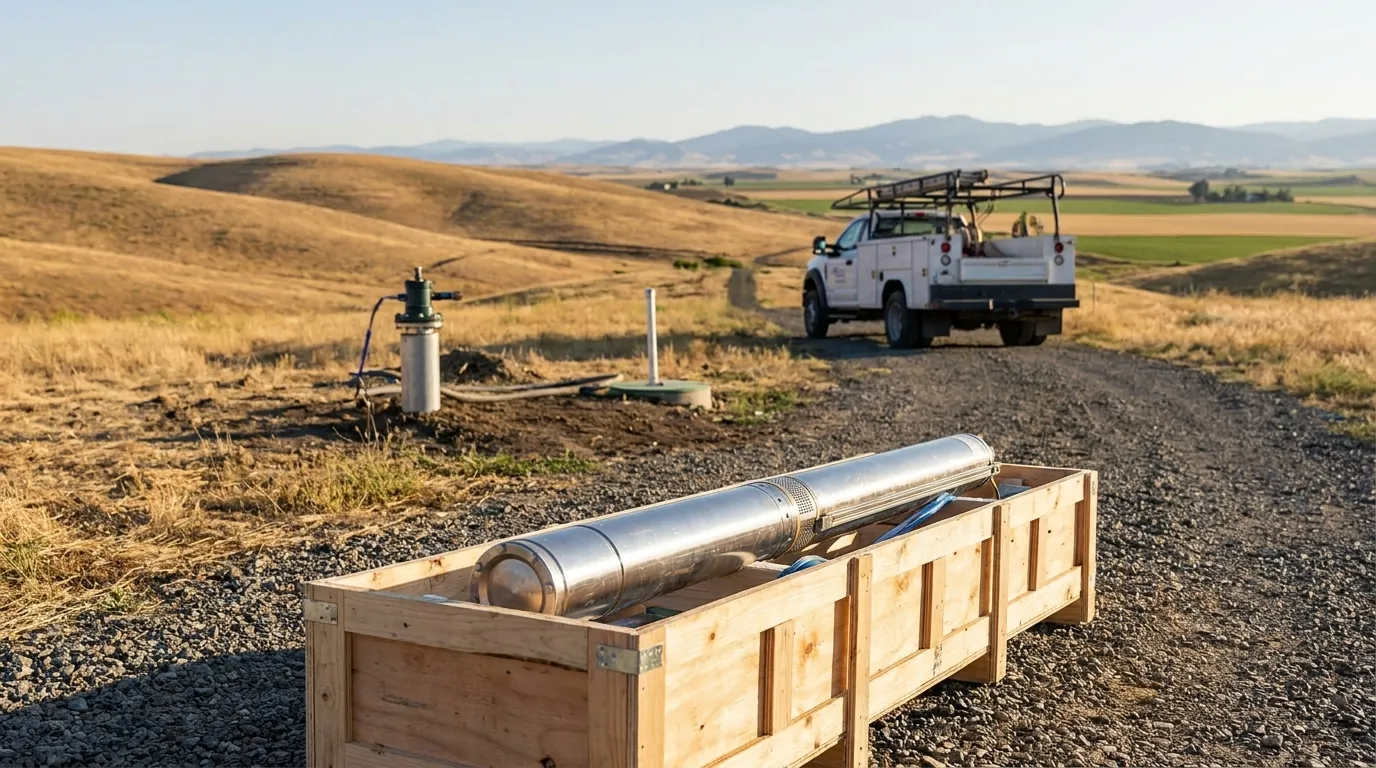
When replacement is the right call
Pumps don't last forever. A submersible pump in a typical Treasure Valley well runs on the order of a decade or more, but mineral-heavy water, frequent cycling, and sand can shorten that. When a pump's motor burns out, the shaft seizes, or the impellers wear past the point of useful pressure, replacing it is usually smarter than pouring money into an old unit that will fail again soon.
Replacement is also the moment to correct mistakes from the last install — a pump that was always undersized for the home's water use, a drop pipe that's corroding, or wiring that's been failing in stages. We treat a replacement as a chance to set the system up right, not just to put the same part back.
If you're not sure the pump is actually the problem, start with well pump repair — a diagnosis there tells us whether a replacement is warranted. A full well inspection is worth doing when you're buying a home with a well or planning ahead.
What a replacement involves
Sizing is the part most people skip. It's also the part that determines whether you're happy for the next decade.
-
Measure the well
Depth of the well, depth to water, and the well's recovery rate tell us how much pump you need and how deep it should sit. Guessing here leads to short cycling or a pump that can't keep up.
-
Match the pump to the home
Number of fixtures, irrigation demand, and how far the water has to be pushed uphill determine the flow and pressure rating. A bigger pump isn't better — oversizing wears parts and wastes power.
-
Pull the old system
We bring up the old pump, drop pipe, wire, and safety rope. This is also when we inspect the casing and check valve for the next pump's sake.
-
Install and splice
New pump, new drop pipe or wire as needed, a watertight splice, and a torque arrestor to protect the wiring from start-up twist. The pump is set at the right depth above the well bottom.
-
Test under load
We run the system, set the pressure switch and tank charge, and confirm the pump holds pressure and shuts off cleanly rather than cycling.
Local factors that drive sizing and cost
Around Nampa, Caldwell and the bench ground toward Eagle and Star, well depth varies widely — from relatively shallow valley-floor wells to deep wells on higher ground. A deeper well needs a pump that can lift water farther, which means more power and more drop pipe and wire to replace. That's the single biggest driver of what a replacement costs.
Water chemistry matters too. The valley's hard, mineral-rich water scales pump components, and a well that produces sand will chew through impellers faster — both of which affect the pump choice and sometimes call for a sediment strategy at the same time. Cold winters mean the above-ground portion of the system has to be protected; we check that the pressure tank and wellhead plumbing won't freeze.
After a replacement, keeping the pressure tank service current protects your new pump by reducing how often it has to start — the single thing that most shortens a pump's life.
Thinking about replacing your well pump?
We'll measure your well and your water use and recommend a pump that fits both — no upselling to a bigger unit than you need.
Serving Nampa and nearby Caldwell, Meridian, Star, Kuna, Eagle and Boise City.
Frequently asked questions
How long should a new well pump last?
A quality submersible pump, properly sized and not short-cycling, commonly lasts well over a decade. Hard water, sand, and a failing pressure tank that makes the pump start constantly all shorten that life considerably.
What drives the cost of a well pump replacement?
Mainly well depth — a deeper well needs a stronger pump plus more drop pipe and wire — along with the pump's horsepower, the condition of the existing wiring and tank, and whether sand or scale calls for extra measures. We explain the drivers before any work.
Can you reuse my old drop pipe and wire?
Sometimes, if they're in good shape. But if they're corroded or the wire insulation is breaking down, reusing them risks a repeat failure soon after. We inspect both while the system is out and recommend accordingly.
Is a bigger pump better?
No. An oversized pump cycles harder, wears faster, and wastes electricity without improving your everyday water. The right pump is matched to your well's output and your household's actual demand.