Well Pump Repair for Nampa Homes
Well pump repair for Nampa-area homes: no water, short cycling, tripped breakers and more. How we diagnose the problem and what the repair involves.
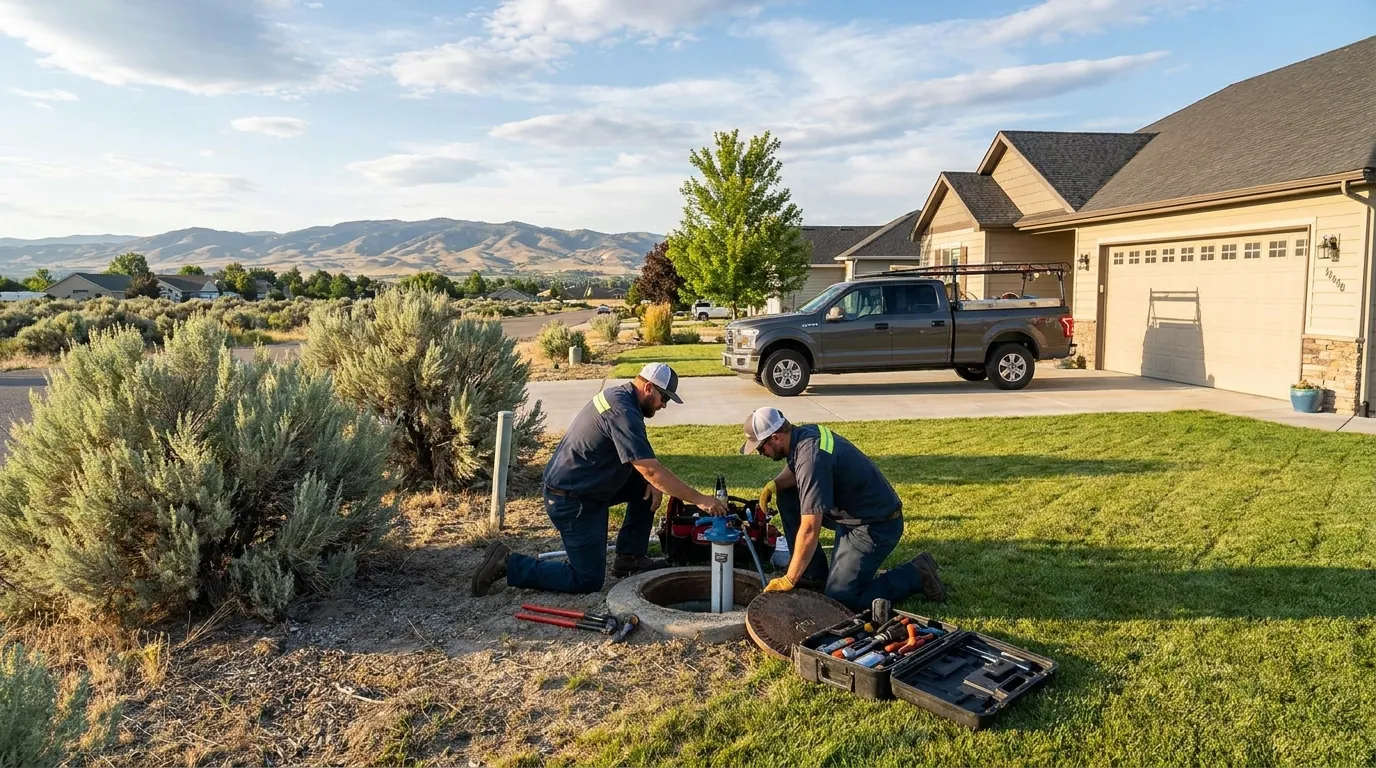
When your well pump needs repair
A well pump that fails rarely does it quietly. You might notice air spitting from the faucets, water that comes in surges, a breaker that trips every time the pump tries to start, or no water at all. On private wells around Nampa, there is no city utility to call, so a failed pump is your whole water supply. The faster the problem is diagnosed correctly, the sooner you have running water again.
Not every water problem is a dead pump. We start by separating the pump itself from the parts around it — the pressure switch, the pressure tank, the control box on a submersible system, the wiring down the well, and the check valve. A worn pressure switch or a waterlogged tank can imitate a failing pump, and replacing a good pump because the real fault was a $20 switch helps no one.
If the trouble is coming from the tank or from pressure control rather than the pump, our pressure tank service and low water pressure diagnosis pages cover those paths in detail. This page is about the pump and well repair work itself — pump well repair done once, correctly.
How a well pump repair goes
The order matters: cheap and accessible tests first, pulling the pump only when the evidence points there.
-
Confirm the symptom
We check whether you have no water, weak water, or intermittent water, and whether the pump runs, hums, or does nothing. Each pattern points at a different cause.
-
Test the easy parts first
Pressure switch, pressure tank air charge, control box and capacitor, breaker and wiring at the surface. Many 'failed pump' calls end here, with a part swapped and the pump untouched.
-
Read the electrical picture
We measure resistance and insulation on the pump wiring down the casing. A pump that is grounded out or a split in the drop wire shows up here before anything is pulled.
-
Pull and inspect if needed
If the evidence points to the pump or motor, we pull the drop pipe, wire, and pump. Worn pumps from mineral-heavy valley water often show scaling on the impellers or a seized shaft.
-
Repair or recommend replacement
Some faults — a bad capacitor, a corroded splice, a failed check valve — are repairs. A burned-out motor in a 15-year-old pump usually isn't worth repairing, and we'll say so plainly.
How Nampa conditions change the repair
Wells across the Treasure Valley are not alike. Depth to water, the mineral content of the water, and the age of the casing all shape how a pump wears and how a repair proceeds. Hard, mineral-rich water from the valley's volcanic and alluvial aquifers scales up impellers and check valves over the years, which is why a pump that merely lost pressure can turn out to be partly clogged rather than electrically dead.
Cold winters add their own wrinkle. Above-ground pressure tanks and exposed wellhead plumbing in unheated pump houses can freeze, and a frozen or split line looks a lot like a pump failure from inside the house. We rule out freeze damage before assuming the trouble is hundreds of feet down. Deeper wells common on the valley's bench ground also mean a longer pull and a heavier pump, which affects how a repair is approached.
If a repair isn't the right call, our well pump replacement page explains how a replacement pump is sized to your well's depth and recovery rate.
Lost your water? Let's find out why.
Tell us what the pump is doing — no water, weak water, or tripping the breaker — and we'll work it from the simplest cause up.
Serving Nampa, Caldwell, Meridian, Star, Kuna, Eagle and Boise City.
Frequently asked questions
Is it a repair or do I need a new pump?
It depends on what failed. A pressure switch, capacitor, check valve, or wiring splice is usually a repair. A burned-out motor or a worn pump in an aging system is often better replaced than repaired, and we'll explain the tradeoff before doing anything.
Why does my breaker trip when the pump tries to start?
A tripping breaker often means the motor is drawing too much current — a failing capacitor or control box, a grounded-out motor, or a wiring fault down the well. We measure the electrical values before pulling anything so we're not guessing.
Can you repair a pump without pulling it out of the well?
Often yes. Many faults live at the surface — the pressure switch, tank, control box, or breaker — and are fixed without touching the well. We only pull the pump when the diagnosis points down the casing.
My water sputters and comes in bursts. What causes that?
Sputtering usually means air in the system — commonly a waterlogged pressure tank, a bad check valve letting water drain back, or a drop in water level pulling the pump intake near the surface. The diagnosis tells us which.