Low Water Pressure Diagnosis on Well Systems
Low water pressure on a Nampa-area well? We trace the real cause — pump, pressure tank, switch, or clogged lines — before anything gets replaced.
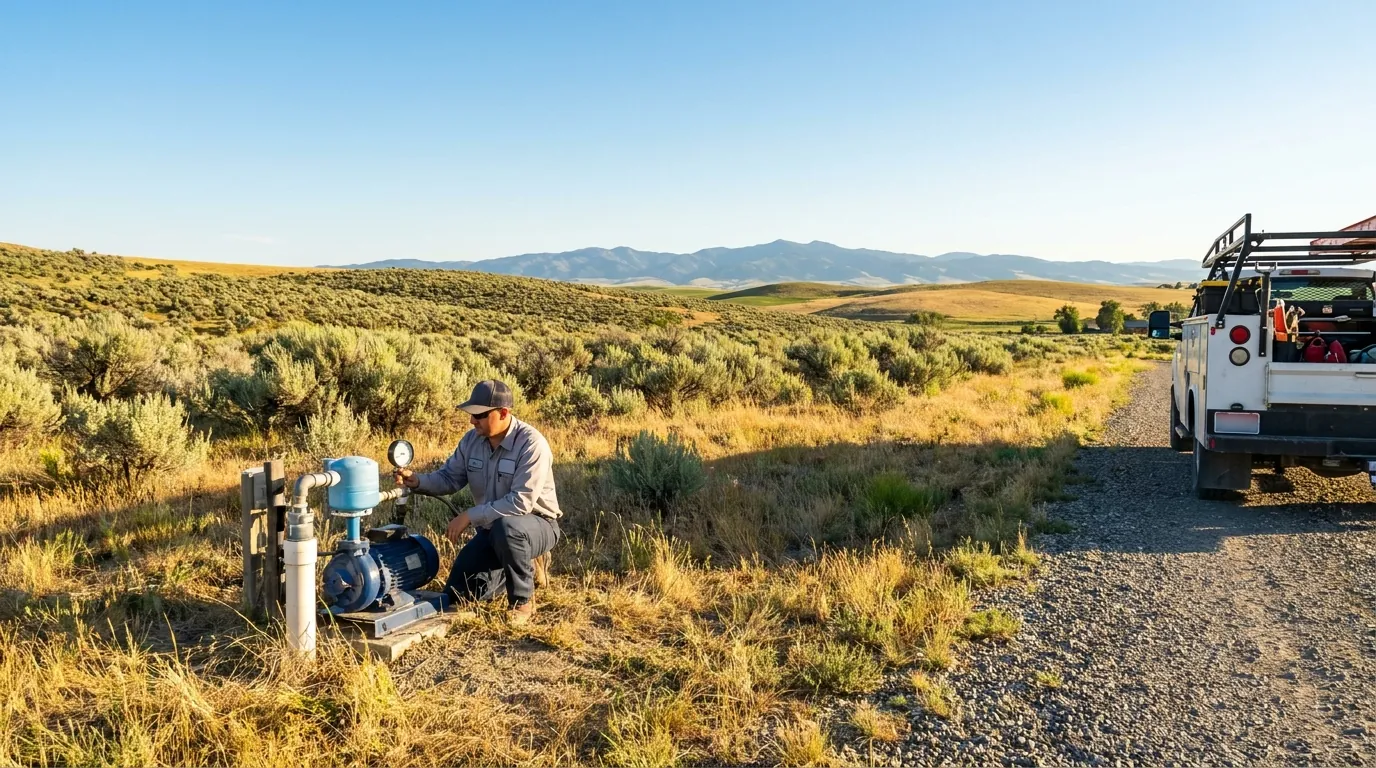
Weak pressure is a symptom, not a diagnosis
Low water pressure feels like one problem, but it can come from half a dozen different places. The pump may be wearing out. The pressure tank may have lost its charge. The pressure switch may be set too low or sticking. Mineral scale may be narrowing pipes and clogging fixtures. The water level in the well may be dropping during heavy use. Each cause has a different fix, and swapping parts at random is how people spend money without solving anything.
The useful question isn't 'is my pressure low' — it's 'where does the pressure drop happen.' We measure at the tank and at fixtures, watch how pressure behaves when water runs, and narrow the cause down before recommending any work.
A lot of low-pressure calls turn out to be the tank or switch rather than the pump — which is why this often overlaps with pressure tank service. When the pump itself is the culprit, the next step is well pump repair.
How we trace low pressure
We follow the water from the well to the faucet and find where the pressure disappears.
-
Read the gauge
We check where pressure cuts in and out at the tank. If it's cutting in too low or never reaching cut-out, the switch or pump is the first suspect.
-
Test the tank
A waterlogged tank causes weak, bouncing pressure and rapid cycling. We check the air charge and bladder before blaming anything deeper.
-
Watch it under load
We run several fixtures and see whether pressure collapses. A steady sag under heavy use can mean a worn pump or a well that isn't recovering fast enough.
-
Check for scale and clogs
If pressure is fine at the tank but weak at one or two fixtures, the problem is downstream — mineral buildup in lines, filters, or aerators, common with valley water.
-
Isolate and recommend
With the drop point identified, we recommend the smallest fix that solves it — a switch, a tank, a cleaning, or pump work — not a blanket replacement.
Why Nampa water drives pressure problems
The Treasure Valley's hard, mineral-rich water is a leading cause of creeping pressure loss. Scale builds inside pipes, check valves, and fixture aerators over years, so pressure fades so gradually that homeowners assume the pump is dying when the real restriction is in the plumbing. Sorting the two apart is the point of a proper diagnosis.
Summer is its own stress test. Dry Nampa summers mean heavy irrigation draw, and a deeper well on the bench ground toward Eagle or Kuna may struggle to keep up, with pressure dropping during peak use even though the pump is sound. Winter can bring partial freezing in exposed lines that chokes flow until things thaw.
If the diagnosis points to a pump that's genuinely worn out, we'll walk you through well pump replacement and how a new pump would be sized to your well.
Tired of weak water?
Let us trace where your pressure is actually being lost before you pay to replace the wrong part.
Serving Nampa, Caldwell, Meridian, Star, Kuna, Eagle and Boise City.
Frequently asked questions
Why did my water pressure drop gradually over time?
A slow decline usually means mineral scale building up inside pipes, check valves, and fixtures — very common with the valley's hard water — or a pump wearing down. A diagnosis separates the plumbing cause from the pump cause.
Why is my pressure fine until I run several fixtures at once?
Pressure that collapses under heavy use often points to a pump that's weakening, a waterlogged tank, or a well that recovers slowly — especially during summer irrigation. We watch the system under load to tell which.
Could low pressure just be the pressure switch?
Yes, and it's one of the cheapest fixes. A switch set too low or sticking can cause chronically weak pressure. We check the switch and tank before assuming anything about the pump.
Is low pressure a sign my pump is about to fail?
It can be, but not always. Many low-pressure cases are the tank, switch, or scaled-up plumbing. We diagnose the actual source so you don't replace a pump that still has life in it.