Well Inspection for Buyers and Owners
Well inspection in the Nampa area for home buyers and owners: pump performance, water level, pressure and well condition, explained in plain terms.
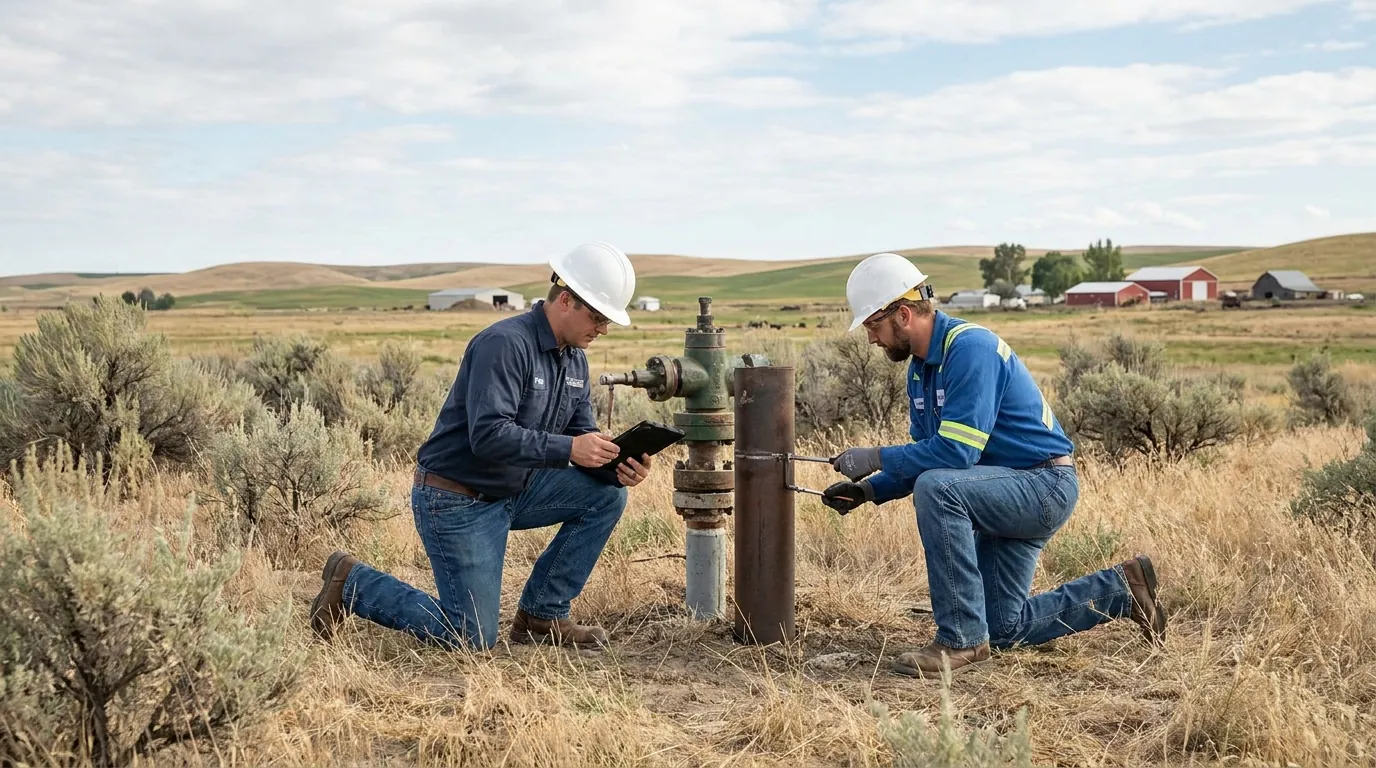
Why inspect a well
A well is easy to ignore until the day it stops. An inspection is the opposite approach: a planned look at the whole system — pump, pressure, water level, and condition — so you understand what you have and what's coming. It's especially valuable when buying a home with a well, where the pump's age and the well's output are usually unknown and can be an expensive surprise after closing.
People searching for well drilling companies near me or well drilling rates often really want to know whether their existing well and pump are sound before they spend on anything bigger. An inspection answers that first. In many cases the well is fine and only a part needs attention; in others, the inspection flags a pump near the end of its life so you can plan rather than scramble.
If the inspection turns up a specific fault, it feeds straight into well pump repair or, where warranted, well pump replacement.
What a well inspection covers
We look at the system as a whole, not just whether water comes out.
-
Flow and pressure
We measure how much water the system delivers and at what pressure, and whether it holds steady under sustained use or fades — a sign of a weak pump or a slow-recovering well.
-
Pump performance
We check how the pump starts, runs, and shuts off, and read the electrical values where accessible to spot a motor or control heading toward failure.
-
Water level and recovery
Where measurable, we look at the static water level and how fast the well recovers after heavy draw — key to knowing whether the well can keep up with the household.
-
Pressure tank and switch
We confirm the tank holds its charge and the pressure switch is set correctly, since these quietly shorten pump life when they drift.
-
Wellhead and casing
We check the visible wellhead, cap, and casing for corrosion, freeze exposure, and a proper seal against surface contamination.
What Nampa-area wells tend to show
Well depth and water level vary a lot across the valley — from shallower wells near the Boise and Snake River bottoms to deeper wells on the bench ground around Eagle, Star and Kuna. A deeper well with a slow recovery rate can test fine on a quick check but fall behind during summer irrigation, so we look at sustained performance, not just a momentary reading.
The valley's hard, mineral-rich water scales up pumps and check valves over the years, and some wells produce sand that wears components faster. These show up in the inspection as reduced flow or pressure that a homeowner might otherwise blame on 'low water.' Cold winters also leave their mark on exposed wellhead plumbing, which we check for freeze risk.
If the inspection points to tank or pressure issues rather than the pump, our pressure tank service covers the fix.
Know your well before it surprises you.
Buying a home with a well, or planning ahead on your own? An inspection gives you a clear picture of the pump, the pressure, and the well itself.
Serving Nampa, Caldwell, Meridian, Star, Kuna, Eagle and Boise City.
Frequently asked questions
Should I inspect a well before buying a home?
Yes. The pump's age and the well's actual output are usually unknown to buyers, and both can be costly surprises. An inspection before closing tells you what you're taking on and gives you room to negotiate or plan.
What's the difference between an inspection and a repair visit?
An inspection is a planned, whole-system review of pump, pressure, water level and well condition, whether or not anything is wrong. A repair visit targets a specific failure that's already happening.
Can an inspection tell me how much longer my pump will last?
Not to the day, but it can flag a pump that's clearly near the end — weak output, rough starts, or electrical readings trending bad — so you can plan a replacement instead of being caught without water.
Will the inspection tell me if my well is running out of water?
It gives strong indicators. By looking at static water level and how fast the well recovers after heavy draw, we can tell whether the well is keeping up with demand or falling behind, especially during summer irrigation.