Pressure Tank Service and Replacement
Pressure tank service for Nampa-area wells: waterlogged tanks, rapid cycling and lost pressure. How we test, recharge, or replace the tank.
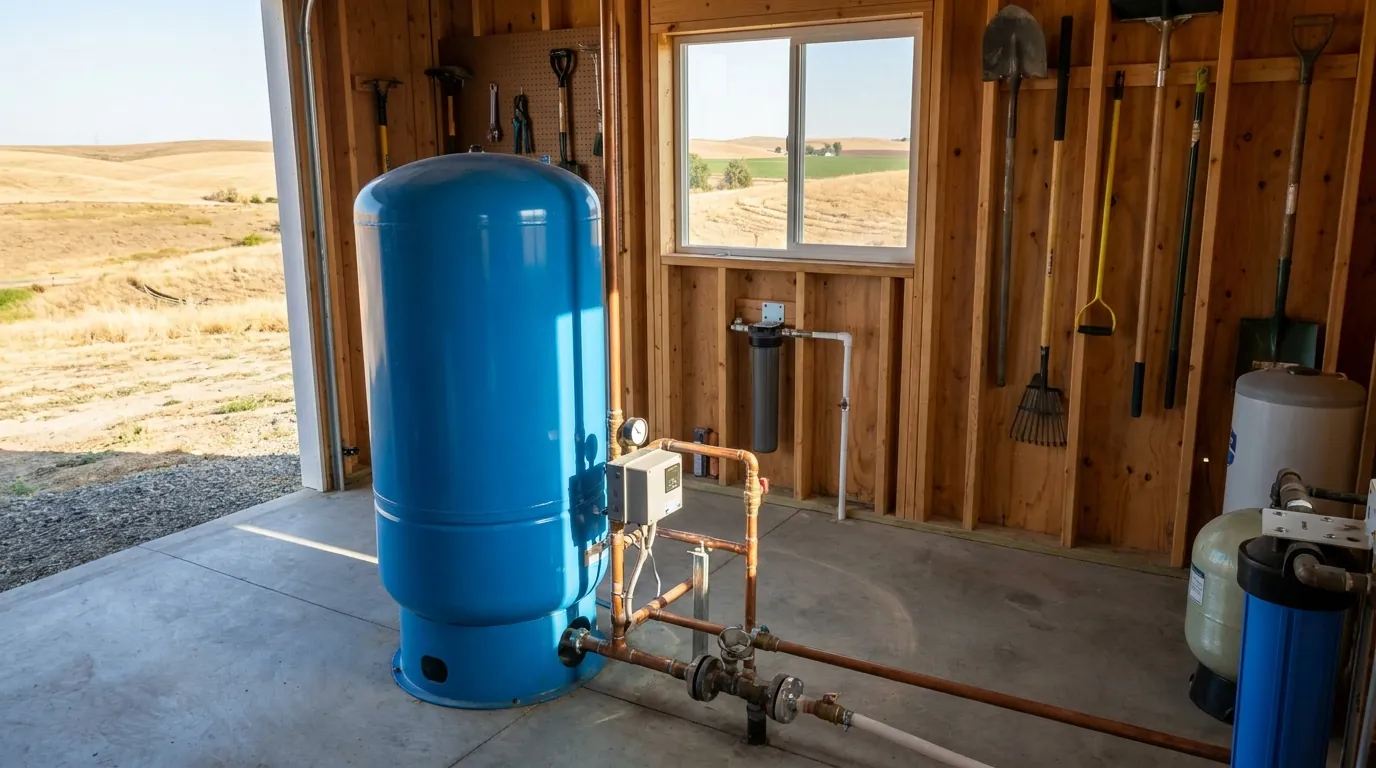
What the pressure tank does — and how it fails
Your pressure tank holds a cushion of pressurized water so the pump doesn't have to start every time you open a tap. Inside is a bladder or air charge that does the cushioning. When that charge is lost — the tank becomes 'waterlogged' — the pump kicks on and off constantly, which is the fastest way to wear out an expensive pump.
The warning signs are easy to miss. The pump cycles on and off rapidly when water is running, pressure bounces at the faucet, or you hear the pump starting far more often than it used to. Left alone, a waterlogged tank can take a healthy pump down with it, turning a cheap fix into a major repair.
Because the tank and pump work together, tank problems and pump problems can look alike from the house. If your trouble is weak pressure rather than cycling, our low water pressure diagnosis sorts out which part is at fault. And when a tank failure has already stressed the pump, well pump repair picks up from there.
How we service a pressure tank
Most tank work is quick once we confirm what the tank is actually doing.
-
Check the air charge
We measure the tank's pre-charge against the pump's cut-in pressure. A tank set wrong — or that's lost its charge entirely — is the usual reason for rapid cycling.
-
Test the bladder
On a bladder tank, we check whether the bladder has failed. Water coming out the air valve is a dead giveaway that the tank needs replacement, not just a recharge.
-
Recharge or replace
A sound tank just needs air set to the right pressure. A ruptured bladder or a rusted-through steel tank gets replaced with a correctly sized unit.
-
Set the pressure switch
We match the switch's cut-in and cut-out to the tank so the system runs smoothly and the pump isn't starting more than it needs to.
-
Verify the cycle
We run water and confirm the pump starts, fills, and shuts off on a healthy, slow cycle instead of hammering on and off.
Nampa conditions and your tank
Cold Treasure Valley winters are hard on pressure tanks, especially in detached pump houses and garages that aren't heated. A tank or its plumbing that freezes can split, and the symptoms from inside the house can mimic a pump failure. We check for freeze exposure as part of any tank visit.
The valley's mineral-rich water also leaves deposits that, over years, corrode older steel tanks from the inside. Sizing matters too: a home on a deeper well toward Eagle or Star benefits from a properly sized tank so the pump — which has to lift water farther — starts as seldom as possible.
If your tank has been failing long enough to stress the pump, it may be time to weigh a well pump replacement rather than repeated repairs. We'll tell you where your system stands.
Pump cycling on and off constantly?
That's almost always a pressure tank problem — and it's wearing out your pump right now. Let's check it before it becomes a bigger bill.
Serving Nampa, Caldwell, Meridian, Star, Kuna, Eagle and Boise City.
Frequently asked questions
What does a waterlogged pressure tank mean?
It means the tank has lost its air cushion, so it can no longer hold a reserve of pressurized water. The pump then has to start every time you use water, which cycles it rapidly and wears it out fast.
Can a bad pressure tank ruin my well pump?
Yes. The most common way pumps die early is being forced to start and stop constantly because the tank can't hold pressure. Fixing the tank promptly is one of the cheapest ways to protect an expensive pump.
Can a pressure tank be recharged, or does it need replacing?
If the tank is otherwise sound and simply lost its air charge, we can recharge it to the correct pressure. If the bladder has ruptured or a steel tank has rusted through, it needs replacement.
How do I know if my tank is the right size?
A tank that's too small forces frequent cycling even when it's working. We match tank size to the pump and household demand so the pump runs on a slow, healthy cycle.